Islamic Republic of Iran

Ministry of Foreign Affairs

Kamancha is one of the Iranian traditional and original musical instruments with a long history. The name of Kamancha has been appeared in some poems and texts from early Islamic periods. The first historic evidence of Kamancha is related to Farabi’s Kitab al-Musiqa al-Kabir in 4th century AH. He called Kamancha is his book by its Arabic name “Rebab”; therefore, some believe that Kamancha has been made by the evolution of Rebab.

Bayasanghor Shahnameh (Persian: شاهنامه بایسنغُری‎) is one of the historical monuments of Iran, which is included in UNESCO’s Memory of the World Register of cultural heritage items in 2007. UNESCO’s Memory of the World Program is a program that was proposed by the International Advisory Committee in 1992 and approved by the Director-General of UNESCO.

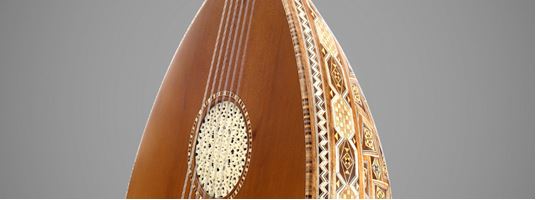
As a multicultural nomination file, Crafting and Playing the Oud was inscribed on the UNESCO Representative List of Intangible Cultural Heritage of Humanity, during the 17th Session of Intergovernmental Committee for the Safeguarding of the Intangible Cultural Heritage. The session was held in Rabat, the capital of Moroco, between November 28- December 3, 2022. Accordingly, the number of Iran’s cultural items inscribed on lists of Intangible Cultural Heritage reached 18.

People have baked the bread from a long time ago. At first, they were mixing the pounded grains with water and baking it on the hot stones; the process of baking bread was then completed over time and after discovering new techniques. Each country has its own bread baking culture. Lavash is one of the oldest breads in Iran which is made today in both traditional and modern ways.

Musicians and singers of North Khorasan include three groups as Lovers, Bakhshies and Leveler (Luti); playing instruments like Kamancheh, Dotar, Sorna, Drum, Quseme and Ney, they compose songs compatible with each historical and cultural event.

Recitation or Parda Khwani is one of the ancient rituals in Iran, with different changes over time. The origin of recitation goes back, in terms of etymology-meaning “story-telling”-, to Parthian period and the Gosans who were well-known for relating the epic stories.

Nowruz (literally translated New Day) is one of the oldest celebrations in ancient Persia, which is held vigorously in the first day of spring marking the beginning of the Iranian calendar (21 March). Nowruz festivities celebrate the beginning of rebirth of nature and lasts for 13 consecutive days.

Zoorkhaneh or Humorous sport is an epic art indicating the Islamic, mythic and ancient Iranian beliefs. This traditional sport is done by 10 to 20 men and it is considered a kind of dramatic sport like Gymnastics. The place of performing this sport is traditionally called Zoorkhaneh (the house of power) which is an enclosed club similar to the shrines in ancient Iran, based on some beliefs.

Miniature or Persian miniature is an art that brings the ability of depicting the whole nature in a small frame and basically refers to any delicate artistic phenomenon, regardless the way it has been created. The word miniature in Persian literally means a small and delicate nature, though the word itself has entered the Persian language in the middle of the recent century and almost since the Qajar period, it is an art which has for long existed and is of an ancient history in Iran.

Pilgrimage to the St. Thaddeus Apostle Monastery was added to the list of the Intangible Cultural Heritage of Humanity (UNESCO). The monastery of St. Thaddeus (also known as the Qara Kelisa) is located in the province of West Azerbaijan, 20 km from the southwest of Maku City, in proximity to a village with the same name.

Today introduced by Olympic international committee as one of the universal sports. Polo has been popular among the kings and Iranian grandee in the past and its name as an aristocratic sport is derived from that. This game dates back to 600 years BC and its genesis is related to Achaemenid era.

There are some nearby villages in the west of Kashan City which is called Aredhal altogether. The center of these villages is Mashhad-e Ardehal that is also known as Mashhad-e Qali (means carpet) by the locals. Being the martyrdom place of one of the Shia’ Imamzadehs is why this place is called Mashhad which literary means the place of Shahadat (martyrdom).

Iranian music is also called Iranian traditional music, classical music of Iran and sometimes instrumental music of Iran. In fact, this art has been transferred orally from Master to student over the years and what is today available to us as the traditional music of Iran is the result of the great men and women endeavor.

Ta’ziye literally means mourning, however, what is evoked for Iranians by hearing the name of Ta’ziye is a special religious and ritual drama in which those who are familiar with the drama techniques perform some theatre for the sake of Moharram and the pains of the third Shia Imam, his family and friends in the region of Karbala and during their battle with Yazid. Since reading artistically the poems is more important than the method of performing the events, it has been named “Ta’ziye Khani” in comparison with “Rodha Khani”.

As a multicultural nomination file, Sericulture and Traditional Production of Silk for Weaving was inscribed on the UNESCO Representative List of Intangible Cultural Heritage of Humanity, during the 17th Session of Intergovernmental Committee for the Safeguarding of the Intangible Cultural Heritage. The session was held in Rabat, the capital of Moroco, between November 28- December 3, 2022. Accordingly, the number of Iran’s cultural elements inscribed on lists of Intangible Cultural Heritage reached 21.

Dotār is the oldest stringed musical instrument not only in Iran, but also in all the Middle East and Central Asia. The depiction of this musical instrument is existing in some of the ancient rock reliefs. In a book composed in Pahlavi language Dotār is called Tanbur or Tambur.

The Deed of Endowment of the Rab' i-Rashidi (Persian: (وقفنامه ربع رشیدی, a 13th-century manuscript, was added to the UNESCO Memory of the World register in 2007.

Building Lenj and boat is one of the oldest local industries in south of Iran dating back to Afsharid period. However, the history of Iranian sailing can be considered to be even longer after discovering Sasanid antiquities in today's Mongolia and also Parthian and Sasanid ports.

One of the most important arts in Fars region with a universal reputation is carpet weaving which is famous as Fars Carpet. The texture in most of the old Fars carpets was woven of wool and all carpets produced in this province are the products of the nomad women in whole process.

Traditional Skills of Carpet Weaving in Kashan
Kashan city was the center of carpet weaving in Shah Abbas period and many carpet weaving workshops were established in this city based on his command.