Ramadan and Eid al- Fitr
Ramadan is celebrated in the ninth month of its calendar and lasts for 30 days.
It consists of fasting from dawn to sunset. This fast is intended to combat evil, atone for sins and obtain divine forgiveness.

Iftar
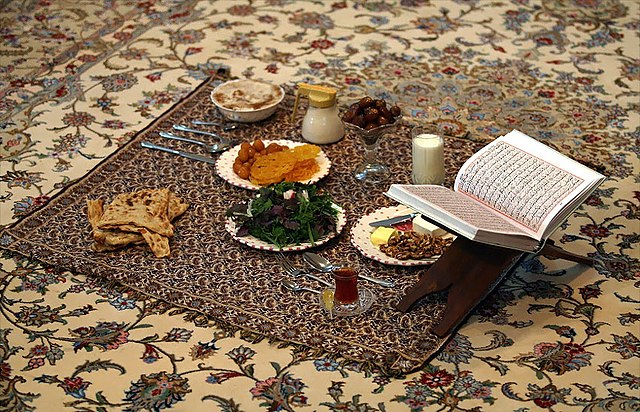
Traditionally Iftar begins with the consumption of dates, which are excellent sources of fibre, sugar and slow carbohydrates. Dates are also believed to be the food that the Islamic prophet Muhammed broke his fast with during Ramadan, along with camel milk and water.
Iftar generally contains foods from all food groups; fruits and vegetables, grains, nuts, beans/meat and dairy. Hydrating vegetables and fluids are also commonly consumed.
Sahar
Sahar is a simpler affair than iftar but still needs to be wholesome to provide enough energy to last during the long hours of fasting. Protein-rich foods are preferred here, including eggs, meats and dairy. Foods such as oats which are slow to digest but high in fibre are also common.
At the end of the Ramadan period, the Eid Fitr is celebrated, which extends over the first two days of Shawwal (the tenth month of the Muslim calendar). It begins with breakfast and then the Muslims bathe, perfume themselves and wear new clothes to visit their families and give them gifts or sweets as a sign of love and share a traditional meal together.
