Agriculture
As the world’s largest producer of saffron, second-biggest producer of pistachios and the third-largest producer of dates, honey, and walnuts in the world, Iran has been among the top exporters of agri-food products in the world, also the world’s top producers of many agricultural products.
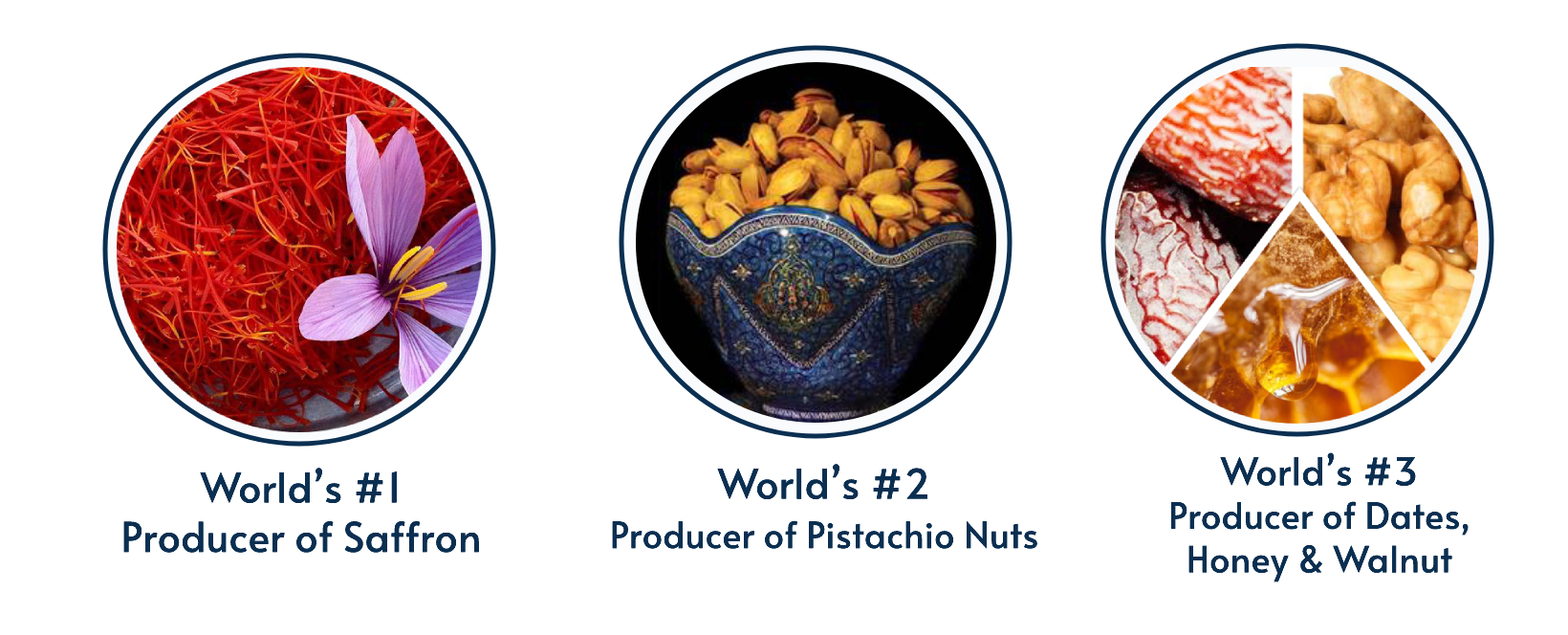
Agriculture is a vital sector of the economy in Iran, contributing to the country's food security, rising rural development, promoting national health and providing employment opportunities for millions of people. Over the years, the government of Iran has made significant investments in the agriculture sector, with a focus on modernizing farms and factories and upgrading infrastructure, increasing productivity, and promoting sustainable and responsible farming practices.
The country is blessed with fertile land and a favorable climate conditions which allow the production of a diverse range of agricultural products, including crops such as wheat, rice, fruits, and vegetables, as well as livestock and poultry.
The latest statistics released by the Food and Agriculture Organization of the United Nations (FAO) based on the statistics of 2020 show that Iran is one of the largest producers of agricultural products in the world and ranks 1st to 19th in the production of 20 important agricultural products.
Iran was ranked second in terms of the export of raisins and eggplant, according to the FAO statistics. The country ranks third in the world in the export of watermelon and gooseberry. Iran is among top five global producer of Sour Cherries, Almond, Walnut, Aubergine, Apple and Apricot.
As for the exports of kiwis and onions, the Islamic Republic of Iran was ranked sixth among the top exporters of the mentioned products. According to the FAO, Iran is the 12th largest producer of wheat in the world. The country’s wheat production in 2020 amounted to 15 million tons. In the production of tea, Iran is ranked 12th as well with a production of more than 84,000 tons.
The Islamic republic of Iran is also ranked 13th in barley production, 18th in terms of olive production, and 19th in the production of pears and tomatoes.
Iran has good fundamentals for food consumption growth. Its population of 85 million people is in majority constituted of people aged 25 to 50, and about 1 million people are added to the demographic each year. The government of Iran has implemented policies and regulations to support the growth and development of the agriculture sector, and has created a favorable business environment for local and foreign businesses to establish themselves in the market. Several countries have bilateral agreements and memoranda of understandings with Iran on sustainable agriculture, plant protection, research, veterinary health, environment protection and joint production of seeds.
In recent years, the government of Iran has made significant investments in modernizing and upgrading the country's agricultural infrastructure including machinery and equipment, and has increased access to modern technologies such as precision farming and sustainable water management systems. These investments have increased productivity and competitiveness, and have helped to spur economic growth.
The government of Iran is aware of the environmental challenges facing agriculture sector and efforts are pursued to improve land management, foster greenhouse cultivation, develop mechanization and irrigation systems, as well as empower farmers. The government is also committed to promoting sustainable and responsible farming practices, recognizing the importance of protecting the environment and preserving natural resources. The country has implemented regulations and standards to ensure that agricultural practices are environmentally friendly and promote the use of renewable energy sources.
The agriculture sector in Iran is a dynamic and growing industry that plays a crucial role in the country's economy and food security, also boosting the country’s non-oil exports. The sector widely enjoys climatic diversity and rich reserves for generating productive occupation, comparative advantage in production and exporting surplus products to local and foreign markets.
There is a wide variety of agricultural stakeholders in Iran. The ministry of Agriculture- Jahad is the main actor in Iran’s agro-economy. During the past years, agriculture sector has experienced profound changes and prosperities in many areas. With a well-developed infrastructure, a skilled workforce, and a commitment to sustainable and responsible practices, the sector is poised for continued success in the years to come.
For more insight and additional details, please refer to the PDF document below, which has been provided by Tehran Chamber of Commerce, Industries, Mines & Agriculture.
Furthermore, for information about investment opportunities of Agriculture sector in Iran, please visit the website of the Organization for Investment, Economic and Technical Assistance of Iran, where you will find detailed information and resources to help guide your investment decisions.
